Build safety and connection
Use low-pressure activities that help guarded students enter the room without feeling exposed.
A practical course with 80+ short video lessons, the 222 Drama Games ebook, written guides, and a 5+1 system for choosing the right activity at the right moment.
Get Lifetime Access - $69 →What happens in the first 30 days
The course gives you a practical sequence instead of a pile of disconnected activities. Each week builds the group a little more before you ask for bigger participation.
Use low-pressure activities that help guarded students enter the room without feeling exposed.
Move into pairs, listening, voice, gesture and structured expression before asking for performance.
Bring scattered attention back into the group with games that build presence, attention and response.
Guide the group into improvisation, imagination and active participation with less resistance.
Random activities vs guided sequence
You are not buying another list of games. You are buying the confidence to know what to run next when the group is quiet, scattered or stuck.

Sonja has worked with children, youth and adults since 2004, leading drama-based learning processes, theatre workshops, participatory projects and performances in formal and informal education.
Her work combines acting, applied theatre, forum theatre, group facilitation and practical drama pedagogy. Inside the course she helps teachers understand how to lower social risk, build ensemble trust, open communication and guide participants into creative expression without forcing performance too early.
Sonja graduated in acting from the Academy of Arts in Novi Sad and holds a master's degree in applied theatre. Her teaching style is direct, practical and grounded in real rooms where confidence, attention and participation have to be built step by step.
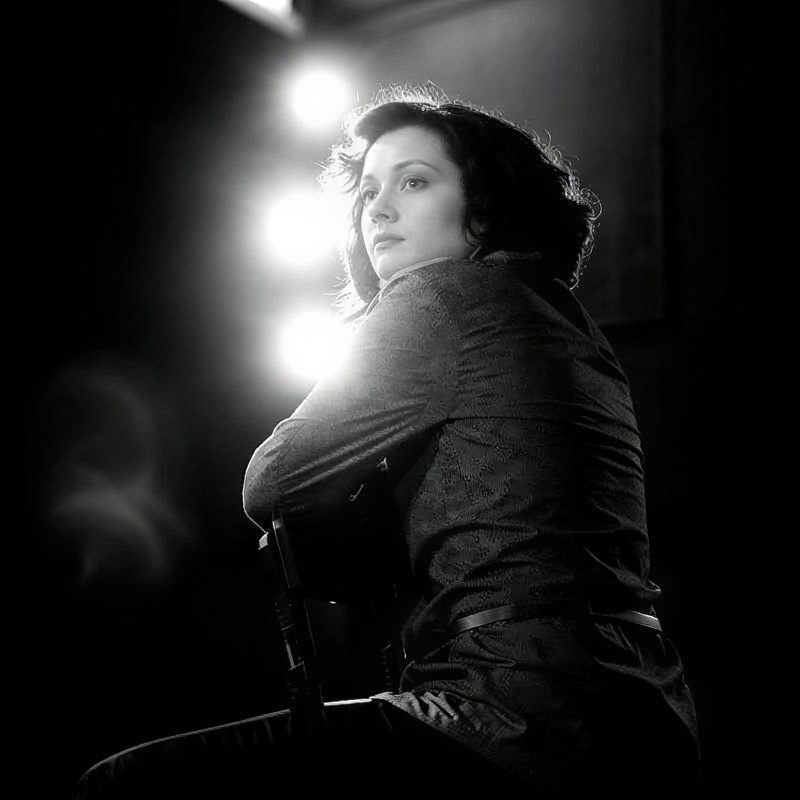
Maja is a director and drama pedagogue with extensive experience using theatre as a practical tool for learning, communication, development and exploring contemporary social issues.
She works with children, youth and adults through creative processes that combine structure, play, reflection and group awareness. Her approach helps participants express themselves more freely, collaborate with others and become more present in the room.
Maja graduated in directing from the Academy of Arts in Novi Sad and is currently training as a psychodrama counsellor. In the course, she brings a director's eye for structure and a facilitator's sensitivity to group safety, rhythm and emotional readiness.
More results from classrooms, workshops, and facilitator-led groups.
Rada's key takeaway: the course gives a structure she can actually use, not just a collection of activities. The point is practical change in group energy and participation.
Christian's key takeaway: the activities feel practical, not theoretical. A clear activity library beats searching random ideas online when you need something for a real group.
Sonja explains: how the 5+1 system works with real groups, and how to choose a game by what the room needs next instead of guessing.
She had tried icebreakers before, but this felt different because the system builds safety before asking students to put themselves out there. By week 3, students who had been silent were speaking up.
High school English teacher, IllinoisHis university seminars used to rely on the same few voices while the rest stayed silent. Four weeks later, the seminars felt unrecognizable because more people were actually participating.
Lecturer, University of LeedsShe worried the course would require drama experience or an outgoing personality. Instead, the exercises were designed for teachers, and her B2 English group started running the room.
Language teacher, BudapestThe biggest reframe for her was that low participation is often a safety issue, not disengagement. The course gave her a clearer way to bring the quieter 70% into the room.
Freelance workshop facilitatorHe expected a school-focused course, but found the same group dynamics in corporate workshops: dominant voices, quiet corners and awkward silences. The system translated directly.
Corporate trainer, ManchesterHer 7th graders were present but not really there. After three weeks, she no longer felt like she was carrying the room alone because the students began to carry more of the energy.
Middle school teacher, OregonFree practical activities from the course
These are the exact sample exercises from the course page. Each one gives participants a safer way into trust, communication or focus before you ask for bigger participation.
Phase 1 · Safety & Connection
Participants work in pairs and complete the sentence: "If you knew me better, you would know that..." The exercise creates a low-pressure path toward trust, openness and deeper group connection.
Use it when the group is guarded, polite, shy or still working as separate individuals. It helps participants share something real without putting them on stage.
Phase 2 · Communication & Listening
One participant repeats "yes" while the other repeats "no." As the exchange continues, tone, rhythm, emotion and intention begin to change, even though the words stay simple.
Use it to show how communication is shaped by listening, energy and relationship. It gives students structure before freedom, which makes expression feel safer.
Phase 3 · Focus & Presence
The group stands in a circle while one person stays in the middle. Two participants silently agree through eye contact to switch places, while the person in the middle tries to take an empty spot.
Use it when attention is scattered or the room needs more alertness. It builds focus, nonverbal awareness and quick group response without singling anyone out.
You need a sequence, clear facilitation, and a way to choose the right activity for the exact moment your group is in.
"I'll show you how to build participation step by step - before you ask quiet students to perform, improvise or speak in front of the whole room."
We identify what is keeping the room stuck and help you choose the next activity fast - using the same practical principles behind drama pedagogy, forum theatre, applied theatre and group facilitation.
Instead of choosing random games, follow the order experienced facilitators use instinctively. Start by making the room safe, then build connection, communication, attention, creativity and reflection.
Lower the social risk. Before students speak, move, improvise or perform, they need a way to enter the room without feeling exposed.
Move from isolated individuals to a group that notices each other. Trust makes participation feel less like a test.
Use pairs, rhythm, tone, gesture and listening so expression grows gradually instead of being demanded all at once.
Bring attention back into the room. Focus games help scattered groups become present, alert and ready to work together.
Only after the group has enough safety and focus do you ask for invention, improvisation and bigger creative choices.
The bonus phase gives you openings, closings and energy resets so sessions begin clearly, shift when needed and end with intention.
Content & Resources
You do not need to reinvent every class. You need access to activities that are organized by group need, explained clearly, and easy to adapt for teenagers, adults, beginners and mixed-confidence groups.
Get Lifetime Access - $69 →The full library included with your course access.
Short demonstrations showing how to set up and lead activities.
A phase sequence for moving groups from safety to creativity.
Ask questions and get help applying the exercises in your context.
Low-pressure games that make participation feel possible.
Activities that build trust, contact and mutual attention.
Voice, tone, listening, response and emotional expression.
Exercises for attention, concentration and group awareness.
Move toward imagination, improvisation and performance with less pressure.
Short activities for starting sessions, shifting energy and ending well.
Instructions under every video so you can review quickly before class.
Instructor support, future updates and lifetime course access.
The value stack
Early access gives teachers and facilitators the whole system now: the course, the ebook, video demonstrations, written guides, community support, future updates and the 30-day guarantee.
Short practical lessons across the full 5+1 system so you can see how the activities work before you run them.
The complete ebook is included, giving you a ready activity library for classrooms, clubs, workshops and groups.
Written exercise steps under each video help you review setup, framing and facilitation fast.
One payment. No subscription. Keep access to the course, future updates, community and instructor support.
Most activity collections fail because they do not help you decide what to do next. This is a course, a library and a practical sequence.
Activities are organized by phase and group need.
The framing is mature, adaptable and suitable for teenagers and adults.
Video demonstrations and written guides show the activity in practice.
You can adapt games for age, confidence, energy and context.
Community
Finally, you have support behind your facilitation. This is for teachers and workshop leaders who want to use drama methods with more clarity, not just download another PDF.
Ask questions when you are unsure how to adapt an activity.
Share what happened in your room and decide what to try next.
Return to the ebook and videos whenever a group need appears.
Keep access as the course improves and new resources are added.
What You're Gonna Get
This is not a monthly subscription and not a giant platform you have to maintain. It is one focused course for building active participation with practical drama games - with lifetime access while early access is open.
This Is Guided Practice, Not A Random Download.
You will leave with activities, structure and confidence to build participation for the next class, the next project and the next group - not just one session.
Join The 30-Day Participation System - $69 →Drama teachers, theatre educators, teaching artists, language teachers, facilitators, youth workers and group leaders who want more active participation.
No. The course gives you video demonstrations and written steps so you can lead the activities clearly even without an acting background.
Yes. The system starts with psychological safety and connection before asking for higher-risk expression or performance.
No. The activities can be framed for teenagers, adults, language classes, corporate workshops and mixed groups.
You can watch a short activity video, read the guide and use the first exercise in your next session.
You have a 30-day money-back guarantee. Try the course and request a refund if it does not help you choose and lead activities with more confidence.
Click below to get early access. Start with one activity, then follow the system for safer, clearer, more active participation.
Get Lifetime Access - $69 →